Jumping on a public Wi-Fi connection saves your monthly data but it can be dangerous. With the ZenVPN you can surf safely on these connections without the fear of unwanted access to your device. Pick up a lifetime subscription to this service foronly $45 – that's 95 percent off– in ourAndroidPITDeals Store.
If you want to use a public Wi-Fi connection, you should be aware of the potential dangers. While on a public connection, your device is more vulnerable to attacks by unwanted third parties. Your priceless personal information can be put at risk. Never fear, the ZenVPN will keep you safe.
Enjoy peace-of-mind with uninterrupted internet surfing and top-notch connectivity in a wide network allocation. When you travel, you'll be able to bypass those pesky geo-restrictions and watch your favorite movies, TV shows and other content. Watch Netflix or Hulu in any country.
Get a lifetime subscription to the ZenVPN foronly $45 – that's 95 percent off the retail price of $1,000. Head over and pick up this service soon, the offer expires in just a couple of days.
HUAWEI MATE 9 PORSCHE DESIGN: WHAT THE MATE 9 COULD HAVE BEEN
Huawei recently chose the Bavarian city of Munich to unveil its successor to the Mate 8’s. As rumors led us to believe, two new devices were introduced: the Mate 9 and the Porsche Design Mate
9. If the first results are anything to go by, in my opinion the Mate 9 is a sequel with very little originality. This isn’t the case with the Porsche Design Mate 9 - it’s the smartphone that the Mate 9 should have been. Here's why.
Huawei has grown to become one of the most successful smartphone manufacturers in the world. Those who disputed that have had to reevaluate their opinions after the brand's recent sound and light show for the European press. The strongest symbol of this new power is without a doubt their partnership with Porsche Design for the creation of the Porsche Design edition of the Mate
9. This version, that rumors had been calling the Mate 9 Pro, differs greatly from the Mate 9 in both form and substance.
The Porsche Design Mate 9 differs greatly from the Mate 9 in both form and content.
A more successful design and better definition
In the automotive world Porsche, in particular the popular 911, is known for being among the best manufacturers in the world. On paper, being associated with Porsche Design appears to be a good idea for Huawei. If anything we would have expected just a little more originality in the device, as there are many similarities to the Galaxy Note7.
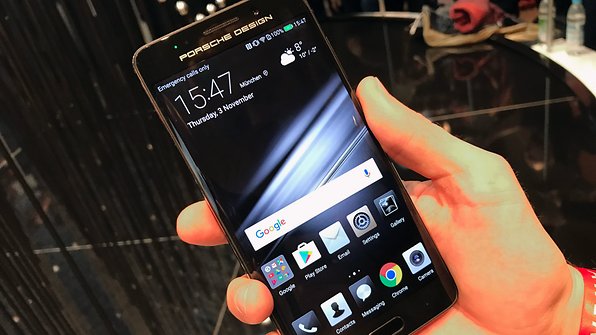
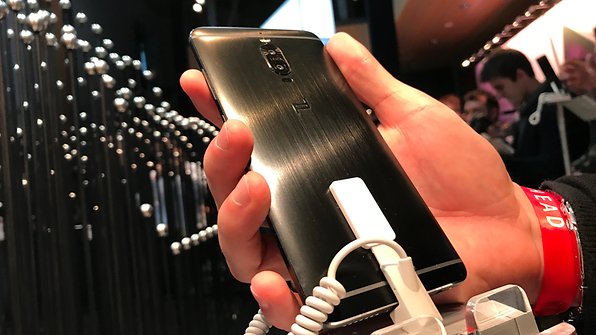
The smartphone has a great design and gives the user a more premium experience than the standard Mate 9. The aluminum encased smartphone sports a beautiful jet black color, much like the latest iPhone 7. The only major drawback is the visibility of fingerprints on the device.
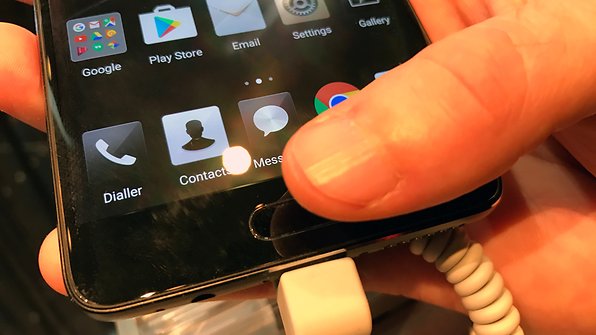
As well as offering a curved display on both sides (again, like the Note7), Huawei has also moved away from its habit of inserting fingerprint readers on the front of the smartphone via a Home button. Instead the sensor is now similar to that of the MediaPad M3 tablet and identical to that which you can find on an HTC or an iPhone 7. However, you have to press it more than you would think.
The Porsche Design Mate 9 offers a smaller screen of 5.5 inches with a QHD (2560 x 1440 pixels) definition. A surprising move for Huawei was their decision to opt for a Full-HD on the standard version even though its screen was larger (5.9 inches). The compact design is also makes it much easier to handle in comparison to the massive Mate 9.
Under the hood, the Porsche Design Mate 9 is also much more ambitious than the Mate 9. Even if this variant has the same Kirin 960 processor and the same Leica dual camera (a 12-mega pixel color sensor (RGB) coupled with a 20-mega pixel monochrome sensor), the Porsche Design Mate 9 uses 6GB of RAM. Finally, it has an internal memory of 256GB. In short, it’s excellent for a top-range smartphone in 2016.
Its compact design is much more ergonomic compared to the massive Mate 9.
The price and release date are its only downfall
The Porsche Design Mate 9 is a more compact and more highly developed version of the Mate 9. In addition to its premium and slim design, a brighter screen with better definition, it also offers better technical specifications with more RAM and a larger internal memory while maintaining all the advantages of the Mate 9: the double Leica camera, the Kirin 960 processor and Android 7.1 Nougat.
The only things that let down the Porsche Design Mate 9 are its price and release date. Unlike the Mate 9, which is due to be released on November 15, not only will we have to wait until next December to buy the Porsche Design Mate 9 it will be on sale for a rather bitter 1,395 euros - 200 euros more than the 256 GB iPhone 7 Plus. Finally, as far as distribution is concerned, we’ll have to hunt them out as the smartphone will only be available from Porsche Design stores.
LG V20 REVIEW: THE BEST SMARTPHONE FOR AUDIOPHILES
In 2016, LG has made a special effort to distinguish itself from its competitors. After launching its first modular smartphone in March, the G5, the South Korean manufacturer is back this Fall with a unique phablet. The LG V20, with its dual screen and removable battery certainly stands apart from the current crowd of smartphones. But, does it deserve to be counted among the best smartphones of the moment? The answer is in our review.
LG’s new flagship device was officially launched on 6 September 2016 in San Francisco. It has been available in the US since November 8, at a price of $799 (for 32 GB), in three colors: Titan (dark grey), Silver, and Pink. A 64 GB version is also available. At the moment, there is no information on whether a release is on the cards for either the UK or Europe. LG is considering a launch on the European market but nothing has been set in stone.
LG V20 design and build quality
The smartphone is a beautiful successor to the LG V10, and its design has evolved to look more like the LG G5. However, the V20 remains an atypical smartphone. It might not be the most elegant device, but it is original. At a time when many manufacturers are just copying designs, LG has chosen to swim against the tide with the V20.
Forget the polycarbonate back on the V10; the LG V20 is metal. This does not mean the smartphone is more fragile, as it has still managed to get a MIL-STD 810G military certification. The shell uses a mix of aluminum and a new silicon-based material, whilst the upper and lower parts are made of polycarbonate. I regret to say though that it lacks IP67 and IP68 certification, which is now standard for many flagship smartphones.
Despite it being a phablet, the V20 is relatively compact, measuring in at 159.7 x 78.1 x 7.6 mm. The edges of the screen are quite fine and the empty space on the angles above and below the screen are quite thin. The headphone jack is located at the bottom of the phone, along with the USB Type-C port and the mono speaker. At the top is the infrared transmitter (thanks LG!) and the microphone which picks up audio at 48 kHz.
The volume buttons are located on the left side of the phone. The buttons for releasing the removable back of the phone for the battery, the SIM and microSD card access is located on the right. The dual rear camera on the back does protrude from the surface but the V20 can still be laid flat on a table without wobbling.
Like Sony, LG has combined the sleep button with the fingerprint reader. The similarities stop here as, unlike the Japanese manufacturer, the V20's button is located on the back of the phone. The button layout has been designed well, so even those with small hands will have easy access.
Using the phone with one hand remains difficult.
Using the phone with one hand is still quite difficult, despite the additional software support from LG. During our test, the sensor responded fairly well but there were some occasions where at least several attempts were needed before the fingerprint was recognized.
Overall, the LG V20 is a large, attractive smartphone that has a unique personality. LG has made some progress on making the phone more attractive but the adjustments are still not perfect. The gaps where different parts of the phone come together are still visible to the eye and noticeable in its handling.
LG V20 display
The LG V20 offers a high definition (1440 x 1560 px) 5.7 inch IPS LCD screen, with a pixel density of 513 ppi. The screen is covered by Gorilla Glass 4 instead of Gorilla Glass 5. Why have they gone with this choice? LG has declined to explain so its anyone's guess really, but as the phone has the MIL-STD 810G military certification, this is not a serious problem.
For my test, the LG V20’s screen seems to be on par with other high-end phones released in the later half of 2016. The viewing angles are good, preserving contrast and visibility even when outdoors. In general, white appears to be bluish, but blacks are visibly deep for an LCD screen. When the screen is too bluish, there is a color correction mode to present a more yellow tone.
Like its predecessor, the presence of a second screen is a key feature. Located just above the 5.7 inch HD main screen is the secondary 2.1 inch screen with a crisp definition (160 x 140 px) that, according to LG, is brighter than the V10. The second screen is useful for direct access to commonly used apps like the phone, calculator, messages, or your latest notifications.
You can also set a signature and fully personalize the phone. Personally, I find that this is not really necessary, but this function is sure to attract a few fans. LG also offers the option to program the screen to turn on or off at specified times. The second screen stays on by default whenever your main screen is off.
At first I was a little underwhelmed by the second screen, seeing it as just a pretty gadget without much purpose. After using it for a while though, I did start to appreciate it a little more. It’s certainly not a necessary feature but it does add to the overall user experience. For example, you can see notifications while still watching a video. That said, the location does not help when handling the phone as you have to contort your fingers to unlock the phone. I found it was convenient to be able to see the time without turning on the main screen but this is certainly not essential - a bit like the Galaxy Note S Pen.
LG V20 special features
The LG V20 has a MIL-STD 810G military certification. This is a standard set by the U.S. Army Test and Evaluation Command. Theoretically, the V20 should be able to withstand being dropped from about 4 feet. I haven’t tried this, largely because I didn’t want to risk disappointment.
LG V20 software
Apart from the Pixel and the Pixel XL, the LG V20 is the first smartphone to be sold withAndroid Nougat. This means that you'll get all the features of the latest version of Android, with the exception of the System UI Tuner and the customizable quick settings. There is also a default multi-window view mode, which is very useful when combined with the V20’s second screen.
Many applications (but not all of them) can operate in split-screen mode regardless of whether you’re holding the phone horizontally or vertically. You should note though that the split screen between two apps can only be achieved in landscape orientation. Some apps, such as Chrome, are better than others in this mode.
You should also note that in the developer options, you can force Android to activate split screen mode for all applications but it’s not guaranteed that they will work properly.
During my review, I received the latest Android security update, which shows just how quickly LG rolls out updates for their devices. Unlike many of their competitors, the South Korean manufacturer seems to fully understand the importance of keeping software up to date. It is safe to bet that the phablet will receive the Android O update when it becomes available next year.
A final word about the LG UI: the V20 strongly resembles the G5. The interface is tidy and colorful. The application tray isn’t present by default but you can enable it in the home screen settings.
There are also other themes available if the default option doesn’t appeal to you. The navigation is fluid as it is identical to system found on the LG G5.
LG V20 performance
Under the hood, the LG V20 has many of the same characteristics found on most other high-end smartphones released in 2016. This includes the famous Snapdragon 820 processor with an Adreno 530 graphics chip and 4GB of RAM. The main difference between the V20 and its predecessor lies with the processor, which is an upgrade from Snapdragon 808.
The LG V20 is fast and reliable, with performance that will not disappoint.
The review results are in line with what can be expected from a device with a Snapdragon 820 processor. The LG V20 is fast and reliable, with performance that will not disappoint. Whilst it isn’t the best performing phone of its generation, it certainly isn’t the worst.
Apps open quickly and multi-tasking can be done without any issues. It is a little better on this front than the Sony Xperia XZ. The LG V20 showed no weakness or signs of slowing down when faced with relentless gaming. I was able to go full out on Asphalt 8 with relative ease.
Geekbench 4.0 single-core: 1612
Geekbench 4.0 Multi-Core: 3730
PCMark Storage: 5701
3DMark Slingshot OpenGL 3.0: 2257
3DMark Slingshot OpenGL 3.1: 1883
Google Octane: 7997
The V20 also offers 32 and 64 GB of internal memory, which can be expanded up to 256GB with a microSD card.
LG V20 audio
The LG V20 has a mono speaker on its underside. There’s nothing miraculous about the audio quality of the speaker. There is some bass present and at high volumes there is a slightly metallic sound. However, it is better than most of its competition and that’s enough for most users. Stereo speakers would have made for a true multimedia experience, which is something that would have been expected of a phone with such a large screen. Not everyone uses Bluetooth speakers.
The real audio experience comes from inside the smartphone.
Even so, music lovers should consider this phone for another reason: the real audio experience comes from inside the smartphone. The V20 has a 32-bit Hi-Fi Quad DAC ES9218 Sabre component from ESS Technology.
To get into specifics, there are four DACs connected in parallel to offer a dynamic range of 124dB and a total harmonic distortion plus noise (THD+N) of -112dB. The result not only improves sound quality but also offers the possibility to natively support lossless compression formats like FLAC, DSD, AIFF, and ALAC - in theory. In practice, I didn’t notice much difference when listening but the result does largely depend on the quality of your headphones. With high-end headphones, the result should be obvious.
Fortunately, LG took their commitment to sound quality a step further with the V20 by giving it three microphones to record “studio quality” 24-bit FLAC audio. The studio mode also gives you the ability to manually control all the recording parameters. The result is fantastic and this is is definitely the best smartphone for people who make audio recordings. Even in noisy environments it still performs well.
LG V20 camera
As with all its flagships, LG attaches great importance to the quality of its cameras. The V20 features the same dual camera system that was launched in April last year in the G5. On the back, there are two lenses: one with 16 megapixels and an aperture of f/1.8 for low light photos and the other for capturing wide-angle photos (1/4 inch) with 8 megapixels and an aperture of f/2.4.
This means you have an angle of 135 degrees to work with. This is very useful for everyday situations, as you will be able to take pictures no other smartphone can capture thanks to this wide angle. The quality, however, is somewhat downgraded as a result, and there is a rounded “fish-eye” effect at the edges. The front camera also has the wide angle feature, including an option to switch from 83 to 120 degrees, but it can only capture 5 megapixel photos. The 120 degree angle on the front camera is perfect for taking selfies with several friends in the shot. Switching between normal and wide angle format is also very simple in the camera app.
As the camera configuration is identical to that of the G5, the user experience with the V20 is good, though there are some problems in managing exposure. Optical stabilization helps it achieve better results but it’s a bit disappointing when shooting video.
I suggest you use the camera's manual mode when taking photos. The manual mode makes it possible to control a variety of parameters including: focus, ISO, shutter speed, exposure and white balance. While the automatic mode isn’t bad, the colors are a bit over-saturated in my opinion.
When shooting in low light, the V20 performs quite well but it overdoes the noise reduction sometimes. If you are using the wide angle camera, images can appear too warm or cold. The Google Pixel or the Samsung Galaxy S7 generally do better in this area.
On the video side, it shoots in 1080p or 4K. Interestingly enough, you can set the microphones to record audio from a certain direction for better sound.
Finally, I wanted to comment on the glass covering the camera lenses. Several users have reported it cracking but this did not happen in my case.
LG V20 battery
The LG V20’s battery isn’t the best for a phablet, with a 3200 mAh battery that is just 400 mAh better than the G5. Though it does have a big advantage: unlike the G5, it can be removed and is easy to change. All you need to do is press the button on the right of the phone to open the cover.
So, how does the LG V20 stand up to everyday use? Well, it’s on the low side of average, especially for a phablet. It’s not the longest lasting smartphone. With normal use, you’ll be able to get through the day without having to plug it in, but that’s a far cry from Motorola's Moto Z, which can last up to two days.
Using PCMark to benchmark the battery’s performance, it got a rather poor score of 4 hours and 3 minutes with full screen brightness and intense phone use. That’s almost an hour less than the Pixel. Note that PCMark simulates typical daily usage and measures the time that passes between when the battery goes from 80 to 20%.
Finally, the LG V20 doesn’t have wireless charging capabilities but it supports Quick Charge 3.0.
LG V20 technical specifications
TYPE:
Phablet
MODEL:
V20
MANUFACTURER:
LG
DIMENSIONS:
159.7 x 78.1 x 7.6 mm
WEIGHT:
173 g
BATTERY SIZE:
3200 mAh
SCREEN SIZE:
5.7 in
DISPLAY TECHNOLOGY:
LCD
SCREEN:
2560 x 1440 pixels (515 ppi)
FRONT CAMERA:
5 megapixels
REAR CAMERA:
16 megapixels
FLASHLIGHT:
Dual-LED
ANDROID VERSION:
7.0 - Nougat
USER INTERFACE:
LG UX
RAM:
4 GB
INTERNAL STORAGE:
64 GB
REMOVABLE STORAGE:
microSD
CHIPSET:
Qualcomm Snapdragon 820
NUMBER OF CORES:
4
MAX. CLOCK SPEED:
2.15 GHz
CONNECTIVITY:
HSPA, LTE, NFC, Bluetooth 4.2
Final verdict
The LG V20 isn’t the perfect smartphone. Neither is it the prettiest nor the longest lasting. It has several shortcomings most notably, it lacks Snapdragon 821, it’s not waterproof, it isn't as polished as its competition and it has an IPS rather than an AMOLED screen. But, that’s not to say it can’t stand up to its competition. The V20 has something they don’t: it dares to be original without being eccentric.
The V20 has a lot to offer users who have been scared away from the Galaxy Note 7.
The V20 is an upgrade from the G5. In addition to having a real personality (thanks to the second screen) and a look that won’t go unnoticed, it does offer the best audio experience on the market. For those who don’t prioritize sound quality, the smartphone also offers amazing picture quality, a removable battery and expandable memory. In short, the V20 has a lot to offer users who were scared away from the Galaxy Note 7. Throw in Android 7.0 Nougat and you can really see the appeal.
Xiaomi doesn’t have a long history: the start-up was established in 2010 and quickly became popular worldwide. Of course, it’s much more popular in China than in most other countries but it has succeeded in establishing a solid reputation without even having to advertise its smartphones in its home country. All the fans know this story, we’re rather more interested in the facts that aren’t widely known.
Who says Chinese manufacturers must have a Chinese name? The term "Xiaomi" is a transposition of Chinese characters to the Western alphabet and, as you might expect, the interpretation is confusing. I asked my Chinese colleague to explain it and, according to her, the two characters 小米 (Xiao and Mi) literally mean “little millet” (millet being a cereal) or even “little rice”.
Xiaomi’s logo resembles the Western character “mi”. Charlotte explains that Xiaomi tried to link Chinese characters with Latin characters since in reverse, the Chinese symbol for "Mi" looks a lot like the character that means “heart”. The term “Mi” is a name that we find on all the brand’s smartphones (Mi, Mi Note and RedMi), conveying a positive idea that is unfortunately lost on Western customers.
2015 was a seminal point for Xiaomi as a company. While in Europe (especially in Berlin) we imagine start-ups as being small businesses of around 30 people trying to make a name for themselves, Xiaomi is a step ahead as it succeeded in surpassing Uber to become the world’s most valuable start-up. What was the turnover at this time? No less than 20 billion! What more could you ask for?
Even if Uber has once again become the number one major start-up Xiaomi fiercely defends their second-place title with a value of $46 billion, far ahead of AirBNB. The company continues to grow and Xiaomi employs more than 8000 employees, which is a considerable number but nothing compared to the 170,000 employees of its Chinese rival Huawei.
The business is on an upward slope but it would be better to avoid resting on their laurels, the market is quickly evolving and its necessary to evolve with it if you want to stay on track.
The business’ activities are very varied
While it’s not surprising to see giants like Sony, Huawei or Samsung moving into various sectors, it’s curious to see this young business taking a similar path. That said, Xiaomi is a case in point and fully understands that the key to success in the high-tech market is to diversify. Admittedly, whilst it is mainly known for smartphones that it sells at “the lowest possible” price to manufacturing costs in order to attract customers, Xiaomi is much more than that.
Xiaomi, of course, specializes in the manufacturing of electronic devices: smartphones, smart bracelets, tablets and smart TVs. It also works on various accessories, from headphones to smart shoes and even more. However, the real surprise lies elsewhere. Xiaomi also develops router technology, game pads and even drones. I didn’t have the chance to test the Mi Drone but according to what I have read on the subject, it’s not the best thing that they have produced.
It’s not just Xiaomi; having the right contacts is always useful in business. Whatever their level, whatever their size. As a newcomer to the market, Xiaomi needed to learn how to get advice from those in the know. In 2013 it succeeded in poaching Hugo Barra, former product manager for Google (and Android development manager) to be its vice-president.
In 2014, Xiaomi welcomed one of the three Apple founders, Steve Wozniak. According to him, Xiaomi has “excellent products” that “good enough to break the American market". That’s how to stroke a small business’ ego. In fact, one of Xiaomi’s creators is called the “Chinese Steve Jobs”, the other is one of the former Google hotshots in China and has also worked at Microsoft. In brief, the start-up has excellent staff to support its activities.
Having good contacts is always useful for a business. Whatever the level, whatever the size
Xiaomi had been / is accused of spying
Perhaps you have already heard that the Chinese tend to spy through their phones. How much of this is stereotyping or reality? In 2014, spyware (spy software) was detected on the Xiaomi RedMi Note and Xiaomi RedMi 1S, and had been activated on models sold in China, Hong Kong and Taiwan. The situation was blown out by the media and an investigation was carried out by a Taiwanese commission that also extended to other regional manufacturers. Result: everyone was cleared.
Despite this, Xiaomi did manage to gain a reputation. In 2015 a German business, G Data, announced that it was common to see spyware on Chinese smartphones, which confirms the results that had already been recorded in the Star N9500. Have things changed since then? As my colleague Eric pointed out, what’s worse - that Chinese know everything about us or that Google knows everything about us?